How High Pressure Damages Copper Pipes
Copper doesn’t usually fail suddenly — it fatigues.
Think of bending a paperclip back and forth.
Eventually, it snaps, not from one bend, but from repeated stress.
High pressure does the same thing to plumbing.
Inside your home, copper pipes slowly:
-
Stretch
-
Thin
-
Become out-of-round
-
Develop pinholes or splits
By the time you notice a leak, the copper has already weakened along other sections of the system.
Why the Pipes Entering Your Home Are Most Vulnerable
The main line entering the house takes the full force of city pressure first.
That section experiences:
-
Continuous pressure load
-
Pressure spikes from street supply
-
Temperature expansion and contraction
-
Daily pressure cycling
Over the years, the pipe slightly expands and loses strength.
Then one day, a small leak appears — often in the garage, crawlspace, wall, or ceiling near where the line enters the home.
Many homeowners repair the leak… only to get another one months later in a different spot.
The cause was never corrected — only the symptom.
Warning Signs of High Water Pressure
Your home may have excessive pressure if you notice:
-
Frequent copper pinhole leaks
-
Pipes that bang when fixtures shut off
-
Faucets that spray aggressively
-
Toilet fill valves are failing often
-
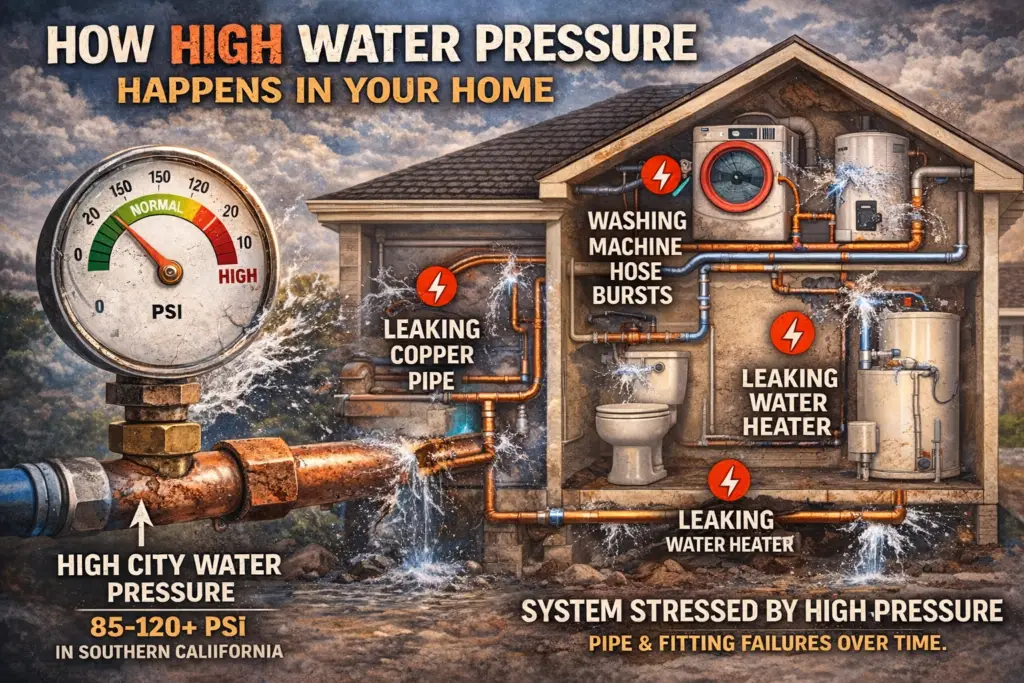
Washing machine hoses are bursting
-
Water heater leaks earlier than expected
One of the biggest clues plumbers see:
A repaired pipe section fits tightly because the old pipe has stretched larger than its original size.
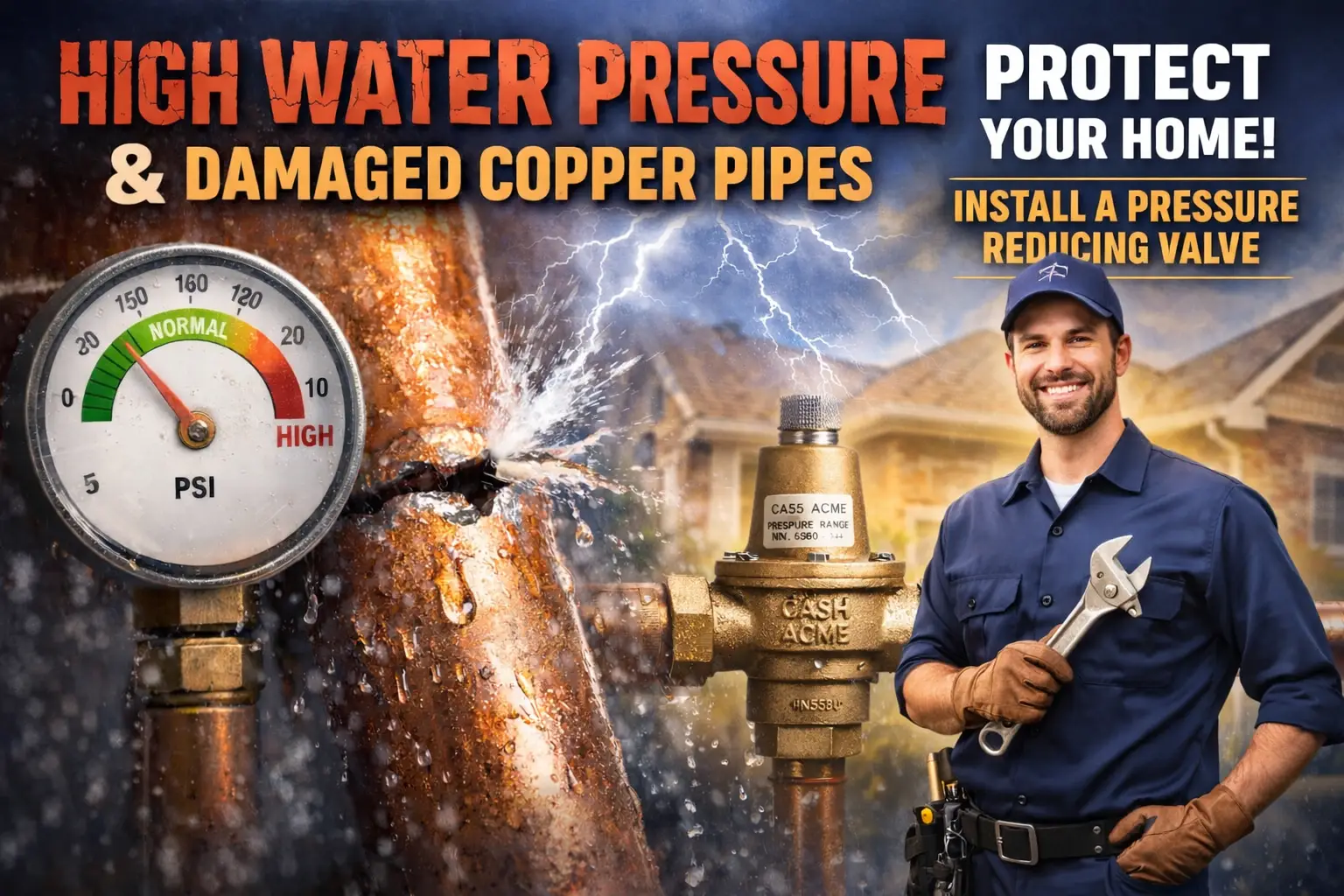
The Solution: A Pressure-Reducing Valve (PRV)
A Pressure-Reducing Valve is installed on the main water line where water enters the home.
Its job is simple:
It lowers and stabilizes incoming city pressure to a safe level before water reaches your plumbing system.
Instead of pressure constantly rising and falling, the PRV keeps your entire house at a controlled pressure.
Typical setting: 60–65 PSI
How a PRV Protects Your Plumbing
Once installed and adjusted, a PRV helps prevent:
-
Copper pipe pinhole leaks
-
Slab leaks
-
Failing angle stops and supply lines
-
Water heater tank stress
-
Appliance valve damage
-
Hose and fixture blowouts
Most importantly, it stops the slow stretching of copper that causes recurring leaks.
Why Fixing Leaks Without Lowering Pressure Doesn’t Last
Repairing a pipe under high pressure is like patching a tire while over-inflated.
The next weak point becomes the next failure.
We often see homes where:
-
One leak happens
-
Another appears months later
-
Then another in a different room
Once pressure is corrected, these repeat failures usually stop.
When to Have Your Pressure Checked
You should test the pressure if:
-
Your home is over 15–20 years old
-
You’ve had more than one plumbing leak
-
Your water feels unusually forceful
-
You live in an area with known high municipal pressure
Pressure testing takes only a few minutes and can prevent major water damage.
Final Thoughts
High water pressure doesn’t just affect comfort — it affects the lifespan of your entire plumbing system.
Copper pipes are durable, but they are not designed to live under constant excessive pressure. Over time, they expand, weaken, and eventually fail.
A properly adjusted pressure-reducing valve protects your pipes, fixtures, and appliances — and prevents future leaks before they start.
If you’ve experienced leaks or want your home’s pressure tested, Plumbing SoCal can inspect and adjust your system to keep it operating safely for years to come.
Call Us Today!
 [ 310-889-6727 ]
 Serving Los Angeles & South Bay Restaurants
 Emergency and scheduled maintenance available